
Overview
Display Location:
- Museum Rocket Garden
Composition:
History
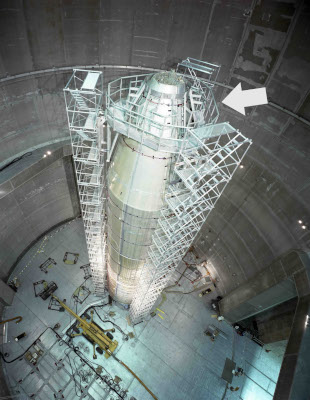
This stile served as a specialized access platform during the assembly and testing of large launch vehicle payloads. It was originally used in 1990 at NASA’s Glenn Lewis Research Center in Cleveland, Ohio, to support separation tests of an 86-foot configuration of the Titan IV launch vehicle fairings. Its design allowed technicians to safely reach critical connection points during complex integration work.
The stile rests atop three scaffolding towers and provides elevated access to the upper joints of a payload fairing as it narrows toward the nose. From this vantage point, engineers and technicians could assemble, inspect, and verify interfaces in one of the most sensitive areas of a launch vehicle stack.
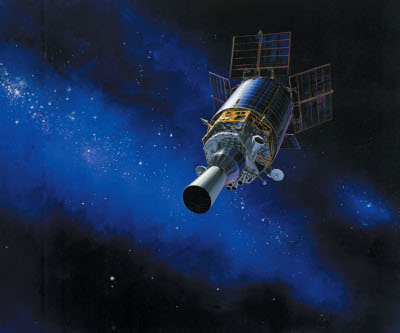
Later in its service life, the stile was used for off-pad payload fairing assembly in support of Defense Support Program satellite number 23. DSP satellites carried infrared sensors capable of detecting the heat signatures of missile and rocket launches, as well as nuclear detonations, by observing plumes against the Earth’s background. For more than three decades, this system formed a cornerstone of U.S. strategic warning and missile detection.
DSP-23 launched from Launch Complex 37B at Cape Canaveral Space Force Station on 11 November 2007 aboard a Delta IV Heavy rocket. That mission marked the final flight in the 36-year Defense Support Program, closing a significant chapter in national security space operations.
This stile was later discovered on Cape Canaveral Space Force Station by the 45th Civil Engineer Squadron. Recognizing its historical value, the structure was transferred to the Cape Canaveral Space Force Museum in April 2025, where it now stands as a tangible reminder of the ground systems and skilled workforce that made critical space missions possible.